
Bringing your dog home after orthopedic surgery can feel like a relief and a little overwhelming at the same time. The procedure is over, but now comes the part that happens largely at home: recovery.
How much should your dog move? When can they use stairs? What if they don’t want to eat? How do you keep an energetic dog calm for weeks?
While every recovery plan is different, knowing what to expect can make those first few days and weeks much easier.
At Kinetic Veterinary Specialists, recovery planning begins before your dog goes home. From pain management and activity restrictions to rehabilitation and follow-up imaging, each step is designed to protect the surgical repair while helping your dog safely regain strength and mobility.
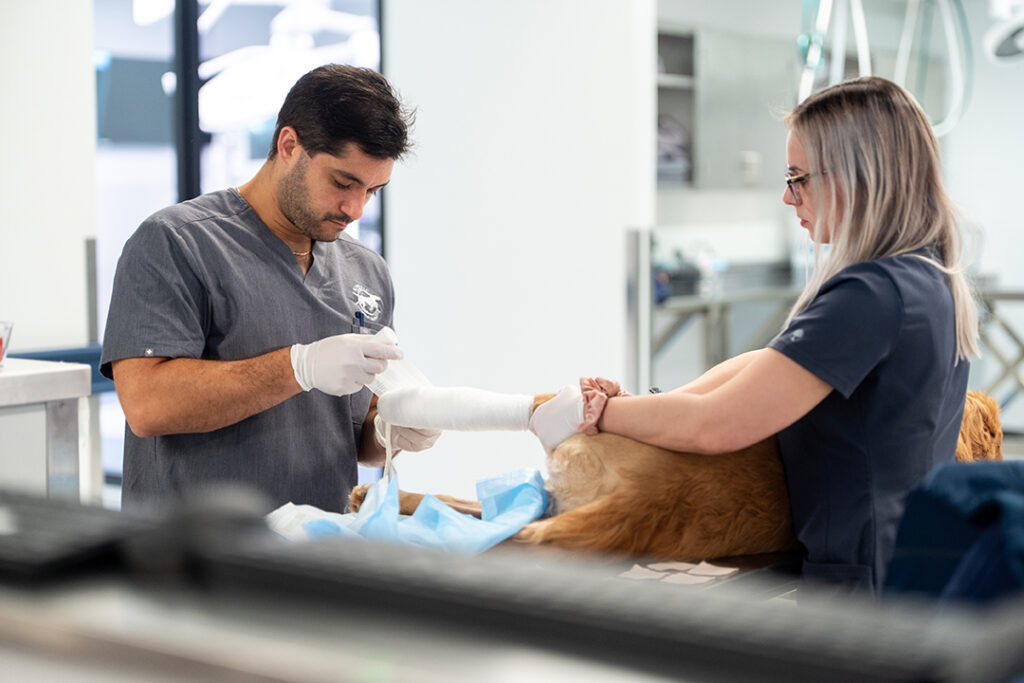
How Long Does Recovery Take After Orthopedic Surgery?
Recovery time depends on the procedure, your dog’s age and overall health, and the condition being treated.
For many orthopedic procedures, activity restrictions may last approximately 8 to 12 weeks, with progress evaluated through follow-up examinations and, when needed, imaging.
That doesn’t mean your dog will be lying still for three months. Recovery happens in stages. Controlled movement and rehabilitation may begin much earlier while running, jumping, rough play, and other high-impact activities remain restricted.
The goal isn’t simply to rest. It’s to allow healing while gradually rebuilding safe, functional movement.
The First 24 to 72 Hours After Surgery
The first few days are usually the most hands-on for pet owners.
Your dog may be sleepy after anesthesia and may temporarily have less interest in food or normal activities. You’ll also be managing medications, monitoring the incision, helping with bathroom breaks, and keeping activity extremely controlled.
Your veterinary team will give you specific discharge instructions, but your priorities will generally include:
- Giving medications exactly as prescribed
- Keeping the incision clean and dry
- Preventing licking or chewing at the surgical site
- Restricting running, jumping and unsupervised activity
- Using a leash for bathroom breaks
- Providing a safe, confined recovery space
- Watching for unexpected swelling, discharge, bleeding or worsening pain
This is also the time to get comfortable with your new routine. A written medication schedule can be especially helpful when your dog is taking several medications at different times.
Creating a Safe Recovery Space at Home
One of the best things you can do before surgery is prepare the area where your dog will spend most of their recovery.
Choose a space that allows your dog to stand, turn around and lie comfortably without having enough room to run or jump.
Depending on your dog, that might mean a crate, playpen or small room.
You may also need to make a few temporary changes around your home.
Add traction.
Hardwood and tile floors can be slippery, especially when a dog is weak or learning to use an operated leg again. Rugs, yoga mats or other nonslip surfaces can create safer walking paths.
Block stairs.
Stairs should generally be restricted until your veterinary team says they are safe. Baby gates can help prevent an enthusiastic dog from attempting them unexpectedly.
Remove opportunities to jump.
That may mean temporarily blocking access to beds, couches and other furniture.
Keep necessities nearby.
Food, water, medications, leashes and recovery supplies should be easy for you to access without encouraging your dog to move around unnecessarily.
What Should Activity Look Like During Recovery?
This is one of the biggest adjustments for many families.
Your dog may start feeling better well before their body has fully healed.
That burst of energy is encouraging, but it doesn’t necessarily mean they’re ready for normal activity.
During early recovery, exercise usually consists of short, controlled leash walks for bathroom breaks and any specific exercises prescribed by your veterinary or rehabilitation team.
As healing progresses, walks may gradually become longer and therapeutic exercises may be added.
Avoid increasing activity simply because your dog seems ready. Bone, ligaments and other tissues need time to heal even when your dog appears comfortable.
Your veterinary team should guide when your dog can safely progress to longer walks, stairs, off-leash activity and eventually normal exercise.
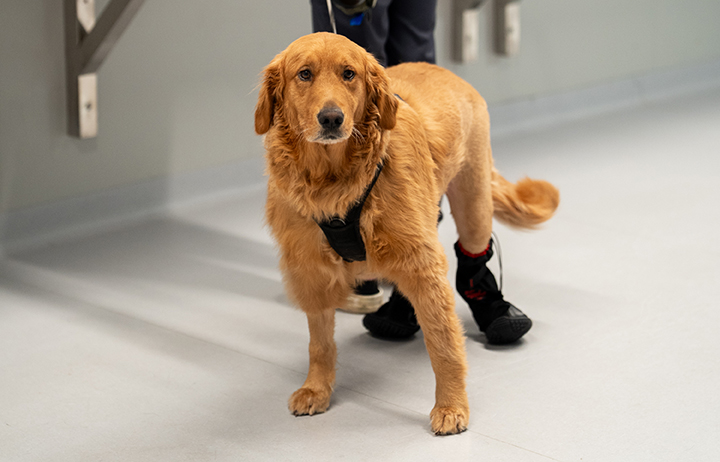
Why Rehabilitation Matters After Surgery
Rest protects healing tissue, but movement is also an important part of recovery.
Without appropriate movement, dogs can lose muscle mass, joint flexibility, balance and strength.
Veterinary rehabilitation helps bridge that gap.
Depending on the procedure and stage of healing, a rehabilitation plan may include:
- Controlled range-of-motion exercises
- Strengthening exercises
- Balance and coordination work
- Therapeutic exercises
- Underwater treadmill therapy
- Gradually increasing controlled activity
At Kinetic Veterinary Specialists, rehabilitation is integrated with surgical care so the surgical and rehabilitation teams can coordinate your dog’s progression throughout recovery.
The goal is not to push your dog harder. It’s to introduce the right movement at the right time.
Managing Pain After Orthopedic Surgery
Good pain management is an important part of healing.
Your dog may go home with a combination of medications designed to control pain and inflammation. Follow the prescribed schedule carefully and never add human pain medication unless specifically directed by your veterinarian.
Dogs also don’t always express pain by crying.
Signs of discomfort can include:
- Panting while resting
- Restlessness or inability to get comfortable
- Trembling
- Reluctance to move
- Decreased appetite
- Changes in sleep
- Guarding the operated limb
- Sudden changes in behavior
If your dog’s pain seems to be increasing rather than improving, contact your veterinary team.
Monitoring the Surgical Incision
Check your dog’s incision every day.
Some mild swelling or bruising may occur early in recovery, but you should become familiar with what the incision looks like so you can recognize changes.
Contact your veterinary team if you notice concerning changes such as increasing redness, significant swelling, discharge, bleeding, an opening in the incision, an unusual odor or persistent licking.
Preventing your dog from licking or chewing the area is important, even if they strongly object to wearing their protective collar.
A few unsupervised minutes can be enough to damage an incision.
What If My Dog Is Already Walking Normally?
This is where recovery can get tricky.
Some dogs begin using their operated leg surprisingly quickly. They may want to run, jump onto the couch or resume their normal routine long before they are medically cleared.
Walking well is a positive sign, but it does not mean the surgical site has finished healing.
Follow the activity restrictions provided by your surgical team until your dog has been cleared to progress.
Follow-Up Visits and Imaging
Recovery isn’t based on the calendar alone.
Follow-up examinations allow your veterinary team to evaluate the incision, mobility, comfort and overall progress.
For procedures involving bone healing, such as TPLO, follow-up X-rays may also be recommended before your dog returns to unrestricted activity.
These visits help answer an important question:
Is your dog ready for the next stage of recovery?
That decision should be based on healing and function rather than simply how many weeks have passed.
When Should You Call Your Veterinary Team?
Questions during recovery are normal. Contact your veterinary team if something doesn’t seem right, particularly if your dog experiences:
- Sudden worsening of lameness
- Significant or increasing swelling
- Bleeding or discharge from the incision
- An incision that opens
- Persistent vomiting or diarrhea
- Refusal to eat or drink
- Difficulty urinating or having a bowel movement
- Severe lethargy
- Signs of uncontrolled pain
- A fall, jump or other unexpected activity that may have affected the surgical site
When in doubt, ask. It is much easier to address a concern early than wait for a scheduled recheck.
Preparing for Surgery? Recovery Starts Before the Procedure
A smoother recovery often begins before surgery day.
Ask your surgical team what your dog’s restrictions will be and prepare your home in advance. Set up the recovery area, add nonslip flooring, arrange help if you have a large dog who may need assistance, and make a plan for medications and follow-up appointments.
Most importantly, remember that recovery is a process.
There may be days when your dog seems dramatically better and others when progress feels slow. What matters is following the plan, protecting the repair and gradually helping your dog return to comfortable movement.
At Kinetic Veterinary Specialists, surgery, advanced imaging, pain management and rehabilitation are coordinated under one roof. Our team works with pet owners and referring veterinarians throughout the recovery process, from the initial consultation through the return to activity.
Families travel to our Clermont specialty hospital from Orlando, Tampa and communities throughout Central Florida and beyond for advanced orthopedic care.
Frequently Asked Questions
How long does it take a dog to recover from orthopedic surgery?
Recovery varies by procedure, but many orthopedic surgeries require several weeks of restricted activity, with some recoveries extending to approximately 8 to 12 weeks or longer. Your dog’s surgeon will determine when activity can safely increase.
How do I keep my dog entertained during surgery recovery?
Food puzzles, lick mats, appropriate chew toys and calm interaction can provide mental stimulation without requiring significant physical activity. Always choose activities that comply with your dog’s specific restrictions.
Can my dog walk after orthopedic surgery?
Many dogs are allowed short, controlled leash walks during recovery, beginning with bathroom breaks and progressing according to their surgical and rehabilitation plan. Follow the instructions provided by your veterinary team.
When can my dog use stairs after surgery?
That depends on the procedure and your dog’s progress. Stairs are often restricted during early recovery. Your veterinary or rehabilitation team can tell you when and how to reintroduce them safely.
When can my dog run again after surgery?
Running, jumping and off-leash activity should wait until your veterinary team confirms adequate healing. Depending on the procedure, follow-up imaging may be needed before your dog is cleared for unrestricted exercise.